
Choosing Between 1P and 2P Solar Trackers to Improve Bifacial Energy Performance
May 13, 2026
The rapid adoption of bifacial solar modules has changed how developers evaluate tracker configurations for utility-scale photovoltaic projects. Unlike traditional modules that mainly capture sunlight from the front surface, bifacial modules can generate additional electricity by capturing reflected irradiance on the rear side.
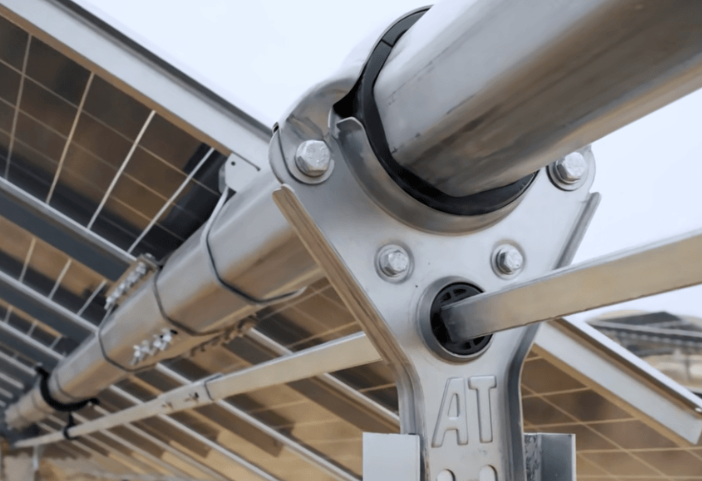
However, maximizing bifacial gain involves more than just selecting bifacial modules. The tracker configuration also plays an important role in determining how much additional energy can be captured. The choice between one-panel-in-portrait (1P) and two-panel-in-portrait (2P) tracker designs directly influences module height, rear-side exposure, shading conditions, and overall system performance.
When we develop tracking solutions, we focus on helping customers select the most suitable configuration according to project conditions. Through AT-Spark, we provide tracker solutions designed to balance energy yield, structural reliability, and installation efficiency for different utility-scale applications.
Bifacial gain depends on how effectively a photovoltaic system can expose the rear surface of modules to reflected sunlight. Several factors influence this performance, including module elevation, row spacing, terrain conditions, and the surrounding ground environment.
A tracker with greater module height may allow more reflected light to reach the rear side of bifacial modules. At the same time, excessive structural height or spacing adjustments can affect project economics by increasing material requirements or reducing land-use efficiency.
The configuration of the tracker determines the relationship between the modules, ground surface, and surrounding rows. Therefore, selecting between 1P and 2P designs requires a comprehensive evaluation rather than simply choosing the system with more modules per row.
A 1P tracker configuration typically supports one module in portrait orientation on each tracker row. This structure generally offers a lighter mechanical design and can provide flexible adaptation to different terrain conditions.
Because the module arrangement is simpler, 1P systems can provide advantages in projects where terrain irregularities, complex layouts, or specific installation requirements are important considerations. The open structure can also support effective rear-side light exposure, depending on project design.
A 2P tracker configuration supports two modules in portrait orientation on each row. By placing more modules on a single tracker structure, 2P systems can reduce the number of rows required for a project. This can improve installation efficiency and potentially reduce certain balance-of-system (BOS) costs.
However, the larger structure changes the way sunlight interacts with the tracker. The distance between modules, structural elements, and ground surface becomes an important factor when evaluating bifacial performance.
For certain projects, 1P trackers may provide advantages for bifacial energy generation because of their design flexibility. The configuration allows developers to optimize module positioning, row spacing, and ground interaction based on site-specific conditions.
Higher module elevation and optimized spacing can improve rear-side irradiance availability by reducing obstruction from neighboring rows. This can be especially valuable in locations with high ground reflectivity, such as light-colored soil or engineered albedo surfaces.
In addition, 1P systems can be easier to adapt to projects where maximizing energy yield is prioritized over achieving the highest module density per row.
However, bifacial performance depends heavily on the overall system design. A well-planned 1P installation can achieve strong rear-side gains, but project conditions must always be considered before making a final decision.
Although 1P configurations can offer certain bifacial advantages, 2P trackers can also provide strong performance depending on the application. By supporting more modules per tracker row, 2P systems can improve land utilization and simplify project layouts.
For large-scale solar farms with suitable terrain and optimized design parameters, 2P trackers can provide an effective balance between energy production and installation efficiency. The increased module capacity per row may help reduce the overall number of tracker structures required.
When combined with bifacial modules, a 2P configuration can still achieve significant rear-side energy gains if factors such as row spacing, module height, and ground reflectivity are properly considered.
The best choice is not determined only by the number of modules installed on each row. Instead, it depends on the relationship between tracker design, project location, and energy optimization goals.
Choosing between 1P and 2P trackers requires analyzing several project-specific conditions. Ground albedo is one of the most important factors because higher reflectivity can increase the amount of light reaching the rear surface of bifacial modules.
Site latitude, terrain conditions, wind requirements, and module characteristics also influence tracker performance. A configuration that performs well in one region may not provide the same results in another location.
Project developers should also consider installation efficiency, maintenance requirements, and long-term reliability. The highest bifacial gain does not always represent the best overall project outcome if it creates additional challenges in construction or operation.
Through AT-Spark, we focus on providing adaptable tracking solutions that allow customers to evaluate these different factors and select a configuration aligned with their project objectives.
There is no universal answer to whether 1P or 2P trackers always maximize bifacial gain. The optimal choice depends on the specific combination of environmental conditions, project priorities, and system design.
For projects focused on maximizing rear-side irradiance through flexible layouts and optimized module positioning, 1P trackers may provide valuable advantages. For projects where land efficiency, simplified layouts, and installation optimization are priorities, 2P trackers can be a strong alternative.
A detailed engineering assessment is essential before any final configuration is selected—developers must weigh expected energy gain against structural performance, installation practicality, and lifecycle economics. Antaisolar, as a mounting solution provider, continues to advance tracker performance and adapt to the evolving demands of photovoltaic projects worldwide.
The comparison between 1P and 2P trackers for bifacial applications is not simply a question of which structure is better. The real answer depends on how each configuration interacts with the project environment and energy objectives.
1P trackers may provide greater flexibility for optimizing rear-side exposure, while 2P trackers can offer advantages in land utilization and project efficiency. By carefully analyzing site conditions and system requirements, developers can select the configuration that delivers the best balance of bifacial gain and overall project value.
With the continued growth of bifacial solar technology, advanced tracker solutions will play an increasingly important role in improving photovoltaic performance. Choosing the right configuration from the beginning can help solar projects achieve higher energy output and stronger long-term returns.
However, maximizing bifacial gain involves more than just selecting bifacial modules. The tracker configuration also plays an important role in determining how much additional energy can be captured. The choice between one-panel-in-portrait (1P) and two-panel-in-portrait (2P) tracker designs directly influences module height, rear-side exposure, shading conditions, and overall system performance.
When we develop tracking solutions, we focus on helping customers select the most suitable configuration according to project conditions. Through AT-Spark, we provide tracker solutions designed to balance energy yield, structural reliability, and installation efficiency for different utility-scale applications.
Why Tracker Configuration Matters for Bifacial Energy Gain
Bifacial gain depends on how effectively a photovoltaic system can expose the rear surface of modules to reflected sunlight. Several factors influence this performance, including module elevation, row spacing, terrain conditions, and the surrounding ground environment.
A tracker with greater module height may allow more reflected light to reach the rear side of bifacial modules. At the same time, excessive structural height or spacing adjustments can affect project economics by increasing material requirements or reducing land-use efficiency.
The configuration of the tracker determines the relationship between the modules, ground surface, and surrounding rows. Therefore, selecting between 1P and 2P designs requires a comprehensive evaluation rather than simply choosing the system with more modules per row.
Comparing 1P and 2P Tracker Structures for Bifacial Applications
A 1P tracker configuration typically supports one module in portrait orientation on each tracker row. This structure generally offers a lighter mechanical design and can provide flexible adaptation to different terrain conditions.
Because the module arrangement is simpler, 1P systems can provide advantages in projects where terrain irregularities, complex layouts, or specific installation requirements are important considerations. The open structure can also support effective rear-side light exposure, depending on project design.
A 2P tracker configuration supports two modules in portrait orientation on each row. By placing more modules on a single tracker structure, 2P systems can reduce the number of rows required for a project. This can improve installation efficiency and potentially reduce certain balance-of-system (BOS) costs.
However, the larger structure changes the way sunlight interacts with the tracker. The distance between modules, structural elements, and ground surface becomes an important factor when evaluating bifacial performance.
How 1P Trackers Can Support Higher Bifacial Performance
For certain projects, 1P trackers may provide advantages for bifacial energy generation because of their design flexibility. The configuration allows developers to optimize module positioning, row spacing, and ground interaction based on site-specific conditions.
Higher module elevation and optimized spacing can improve rear-side irradiance availability by reducing obstruction from neighboring rows. This can be especially valuable in locations with high ground reflectivity, such as light-colored soil or engineered albedo surfaces.
In addition, 1P systems can be easier to adapt to projects where maximizing energy yield is prioritized over achieving the highest module density per row.
However, bifacial performance depends heavily on the overall system design. A well-planned 1P installation can achieve strong rear-side gains, but project conditions must always be considered before making a final decision.
When 2P Trackers May Deliver Better Project Value
Although 1P configurations can offer certain bifacial advantages, 2P trackers can also provide strong performance depending on the application. By supporting more modules per tracker row, 2P systems can improve land utilization and simplify project layouts.
For large-scale solar farms with suitable terrain and optimized design parameters, 2P trackers can provide an effective balance between energy production and installation efficiency. The increased module capacity per row may help reduce the overall number of tracker structures required.
When combined with bifacial modules, a 2P configuration can still achieve significant rear-side energy gains if factors such as row spacing, module height, and ground reflectivity are properly considered.
The best choice is not determined only by the number of modules installed on each row. Instead, it depends on the relationship between tracker design, project location, and energy optimization goals.
Factors That Determine the Best Configuration for Bifacial Gain
Choosing between 1P and 2P trackers requires analyzing several project-specific conditions. Ground albedo is one of the most important factors because higher reflectivity can increase the amount of light reaching the rear surface of bifacial modules.
Site latitude, terrain conditions, wind requirements, and module characteristics also influence tracker performance. A configuration that performs well in one region may not provide the same results in another location.
Project developers should also consider installation efficiency, maintenance requirements, and long-term reliability. The highest bifacial gain does not always represent the best overall project outcome if it creates additional challenges in construction or operation.
Through AT-Spark, we focus on providing adaptable tracking solutions that allow customers to evaluate these different factors and select a configuration aligned with their project objectives.
Making the Right Choice Between 1P and 2P Trackers
There is no universal answer to whether 1P or 2P trackers always maximize bifacial gain. The optimal choice depends on the specific combination of environmental conditions, project priorities, and system design.
For projects focused on maximizing rear-side irradiance through flexible layouts and optimized module positioning, 1P trackers may provide valuable advantages. For projects where land efficiency, simplified layouts, and installation optimization are priorities, 2P trackers can be a strong alternative.
A detailed engineering assessment is essential before any final configuration is selected—developers must weigh expected energy gain against structural performance, installation practicality, and lifecycle economics. Antaisolar, as a mounting solution provider, continues to advance tracker performance and adapt to the evolving demands of photovoltaic projects worldwide.
Conclusion
The comparison between 1P and 2P trackers for bifacial applications is not simply a question of which structure is better. The real answer depends on how each configuration interacts with the project environment and energy objectives.
1P trackers may provide greater flexibility for optimizing rear-side exposure, while 2P trackers can offer advantages in land utilization and project efficiency. By carefully analyzing site conditions and system requirements, developers can select the configuration that delivers the best balance of bifacial gain and overall project value.
With the continued growth of bifacial solar technology, advanced tracker solutions will play an increasingly important role in improving photovoltaic performance. Choosing the right configuration from the beginning can help solar projects achieve higher energy output and stronger long-term returns.
end