
Vertical Solar Panel Mount or Tilted Mounting Systems: Choosing the Right Ground-Mount Strategy
May 25, 2026
The design of ground-mounted solar projects is becoming more complex as developers look for solutions that balance energy production, land usage, maintenance needs, and site adaptability. While traditional tilted arrays have dominated utility-scale installations for years, vertical configurations are gaining attention in applications where conventional layouts may not be the most practical option.
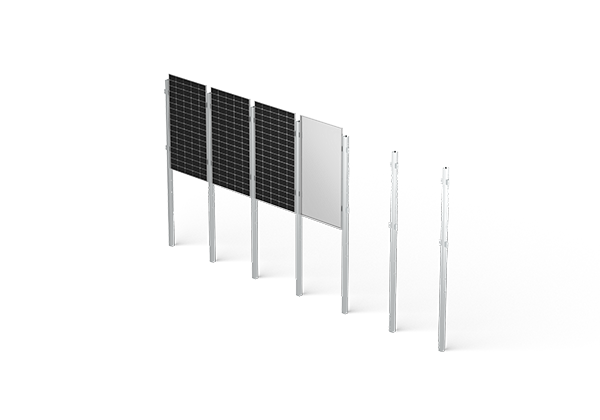
The choice between a tilted structure and a vertical arrangement is not simply about which system generates more electricity. Project conditions such as available land, agricultural requirements, environmental factors, and operational goals all influence the most suitable mounting approach.
Solar installations succeed when the mounting structure fits the site—not when the same design is forced onto every project. Antaisolar embraces this philosophy across our vertical mounting lineup, which addresses specific applications such as pastures, fences, and highways, where optimizing space and enabling dual-purpose land use are top considerations.
Traditional tilted solar systems position modules at an angle designed to capture sunlight efficiently throughout the year. This configuration has become widely adopted because it offers a familiar design approach and works well across many utility-scale projects.
By orienting photovoltaic modules upright instead of at a conventional tilt, a vertical solar panel mount alters the angle of sunlight incidence—resulting in performance characteristics that shift distinctly throughout the day.
The vertical approach is especially relevant when project developers need to maximize land functionality. For example, some sites may need to maintain space for agricultural activities, livestock movement, fencing applications, or transportation corridors.
Rather than replacing tilted systems in every situation, vertical mounting provides another option for projects with specific requirements. The better choice depends on how the solar array needs to interact with the surrounding environment.
In locations where conventional tilted layouts pose challenges, vertical solar panel mounts offer distinct advantages. By occupying less horizontal space, this design enables projects that demand greater ground accessibility—a consideration that Antaisolar builds into its vertical mounting solutions for sites where land use flexibility is essential.
One important application is agrivoltaics, where solar generation is combined with agricultural activities. Vertical arrays can allow more open space between panel rows, making it easier for farming operations, equipment movement, and land management activities to continue.
Vertical configurations can also serve additional functions beyond energy production. In some projects, the solar structure can operate as a boundary system, wind barrier, or integrated infrastructure element. Antaisolar’s vertical mounting solution is designed for applications including pastures, fences, highways, and guardrails, helping improve space utilization while supporting solar deployment.
Another consideration is maintenance. Vertical modules may experience reduced accumulation of certain types of debris compared with low-angle installations, which can influence cleaning strategies depending on the project environment.
Energy output is often the first factor developers consider when comparing different mounting structures. Tilted systems are designed around optimizing the angle of solar modules toward incoming sunlight, which can provide strong annual generation performance in many locations.
However, energy production is not determined only by module angle. Factors such as row spacing, shading, land availability, module technology, and local electricity demand patterns also affect overall project value.
Vertical systems can provide different generation patterns compared with traditional tilted arrays. For example, east-west vertical layouts may capture sunlight during morning and afternoon periods when electricity demand may be significant in some regions.
For projects using bifacial modules, vertical configurations may create additional opportunities because both sides of the module can interact with available sunlight. However, the actual benefit depends on site conditions, ground reflectivity, spacing design, and system configuration.
Therefore, choosing between vertical and tilted mounting requires evaluating total project performance rather than focusing only on peak generation values.
From an engineering perspective, mounting orientation directly affects structural requirements. Solar structures must be designed to handle environmental forces while maintaining long-term stability.
A vertical solar panel mount requires careful consideration of wind loading because upright modules interact differently with airflow compared with tilted panels. The foundation design, support structure, and connection points must all work together to ensure reliable operation.
Installation efficiency is another important factor. Ground conditions, project scale, and foundation options influence construction requirements. A flexible mounting system can help developers adapt designs to different site environments.
Antaisolar’s vertical mounting solutions incorporate stable structural designs, optimized connections, and flexible foundation options to support different project needs. These features help simplify installation while maintaining structural reliability.
For developers, the ideal system is one that not only performs well after installation but also reduces complexity during construction.
The decision between vertical and tilted structures should begin with the project’s purpose. A conventional tilted system may remain the preferred option for sites where maximizing traditional solar yield is the primary objective.
However, vertical mounting can become more attractive when land use flexibility is a major priority. Projects located on agricultural land, narrow corridors, or multifunctional spaces may benefit from a design that leaves more usable ground area.
Developers should evaluate several questions before selecting a structure:
Is preserving ground access important for the project?
Does the site have agricultural or infrastructure requirements?
Are bifacial modules being considered?
Are maintenance and land management priorities important?
Does the project need additional functions beyond electricity generation?
A careful assessment helps prevent choosing a mounting system based only on industry habits. The best solution is the one that matches the physical and operational characteristics of the site.
Solar mounting systems now play a broader role than supporting panels. They are essential to using land productively and integrating renewable energy across different settings—a reality that guides Antaisolar's ongoing development of adaptable mounting solutions.
Antaisolar focuses on designs that bring together structural strength, installation practicality, and site-specific function. Developers who address these factors together are better equipped to build systems with lasting performance and value.
Greater design flexibility will be essential for future solar deployment. As land, climate, and project objectives continue to diversify, mounting solutions that adapt without sacrificing reliability will become increasingly important to the industry's progress.
There is no universal winner between vertical and tilted solar mounting systems. Traditional tilted structures remain highly effective for many projects, while vertical solutions provide valuable advantages in applications where land flexibility, accessibility, or multifunctional use are priorities.
Vertical solar panel mounts can be a smart fit for ground-mounted projects where land efficiency is a priority alongside power production—but only when technical requirements, environmental variables, and long-term objectives are carefully weighed.
Solar projects succeed when mounting strategies are shaped by site-specific conditions—not when the same design is repeated across diverse environments. Antaisolar recognizes this and builds its solutions around the unique requirements of each project, not a fixed template.
The choice between a tilted structure and a vertical arrangement is not simply about which system generates more electricity. Project conditions such as available land, agricultural requirements, environmental factors, and operational goals all influence the most suitable mounting approach.
Solar installations succeed when the mounting structure fits the site—not when the same design is forced onto every project. Antaisolar embraces this philosophy across our vertical mounting lineup, which addresses specific applications such as pastures, fences, and highways, where optimizing space and enabling dual-purpose land use are top considerations.
Understanding the Differences Between Vertical and Tilted Solar Structures
Traditional tilted solar systems position modules at an angle designed to capture sunlight efficiently throughout the year. This configuration has become widely adopted because it offers a familiar design approach and works well across many utility-scale projects.
By orienting photovoltaic modules upright instead of at a conventional tilt, a vertical solar panel mount alters the angle of sunlight incidence—resulting in performance characteristics that shift distinctly throughout the day.
The vertical approach is especially relevant when project developers need to maximize land functionality. For example, some sites may need to maintain space for agricultural activities, livestock movement, fencing applications, or transportation corridors.
Rather than replacing tilted systems in every situation, vertical mounting provides another option for projects with specific requirements. The better choice depends on how the solar array needs to interact with the surrounding environment.
Vertical Solar Panel Mount Applications and Advantages
In locations where conventional tilted layouts pose challenges, vertical solar panel mounts offer distinct advantages. By occupying less horizontal space, this design enables projects that demand greater ground accessibility—a consideration that Antaisolar builds into its vertical mounting solutions for sites where land use flexibility is essential.
One important application is agrivoltaics, where solar generation is combined with agricultural activities. Vertical arrays can allow more open space between panel rows, making it easier for farming operations, equipment movement, and land management activities to continue.
Vertical configurations can also serve additional functions beyond energy production. In some projects, the solar structure can operate as a boundary system, wind barrier, or integrated infrastructure element. Antaisolar’s vertical mounting solution is designed for applications including pastures, fences, highways, and guardrails, helping improve space utilization while supporting solar deployment.
Another consideration is maintenance. Vertical modules may experience reduced accumulation of certain types of debris compared with low-angle installations, which can influence cleaning strategies depending on the project environment.
Comparing Energy Performance Between Vertical and Tilt Mount Systems
Energy output is often the first factor developers consider when comparing different mounting structures. Tilted systems are designed around optimizing the angle of solar modules toward incoming sunlight, which can provide strong annual generation performance in many locations.
However, energy production is not determined only by module angle. Factors such as row spacing, shading, land availability, module technology, and local electricity demand patterns also affect overall project value.
Vertical systems can provide different generation patterns compared with traditional tilted arrays. For example, east-west vertical layouts may capture sunlight during morning and afternoon periods when electricity demand may be significant in some regions.
For projects using bifacial modules, vertical configurations may create additional opportunities because both sides of the module can interact with available sunlight. However, the actual benefit depends on site conditions, ground reflectivity, spacing design, and system configuration.
Therefore, choosing between vertical and tilted mounting requires evaluating total project performance rather than focusing only on peak generation values.
Structural and Installation Considerations for Vertical Solar Panel Mount Systems
From an engineering perspective, mounting orientation directly affects structural requirements. Solar structures must be designed to handle environmental forces while maintaining long-term stability.
A vertical solar panel mount requires careful consideration of wind loading because upright modules interact differently with airflow compared with tilted panels. The foundation design, support structure, and connection points must all work together to ensure reliable operation.
Installation efficiency is another important factor. Ground conditions, project scale, and foundation options influence construction requirements. A flexible mounting system can help developers adapt designs to different site environments.
Antaisolar’s vertical mounting solutions incorporate stable structural designs, optimized connections, and flexible foundation options to support different project needs. These features help simplify installation while maintaining structural reliability.
For developers, the ideal system is one that not only performs well after installation but also reduces complexity during construction.
When Should Developers Choose Vertical Instead of Tilted Mounting?
The decision between vertical and tilted structures should begin with the project’s purpose. A conventional tilted system may remain the preferred option for sites where maximizing traditional solar yield is the primary objective.
However, vertical mounting can become more attractive when land use flexibility is a major priority. Projects located on agricultural land, narrow corridors, or multifunctional spaces may benefit from a design that leaves more usable ground area.
Developers should evaluate several questions before selecting a structure:
Is preserving ground access important for the project?
Does the site have agricultural or infrastructure requirements?
Are bifacial modules being considered?
Are maintenance and land management priorities important?
Does the project need additional functions beyond electricity generation?
A careful assessment helps prevent choosing a mounting system based only on industry habits. The best solution is the one that matches the physical and operational characteristics of the site.
Building More Adaptable Solar Projects Through Better Mounting Choices
Solar mounting systems now play a broader role than supporting panels. They are essential to using land productively and integrating renewable energy across different settings—a reality that guides Antaisolar's ongoing development of adaptable mounting solutions.
Antaisolar focuses on designs that bring together structural strength, installation practicality, and site-specific function. Developers who address these factors together are better equipped to build systems with lasting performance and value.
Greater design flexibility will be essential for future solar deployment. As land, climate, and project objectives continue to diversify, mounting solutions that adapt without sacrificing reliability will become increasingly important to the industry's progress.
Conclusion
There is no universal winner between vertical and tilted solar mounting systems. Traditional tilted structures remain highly effective for many projects, while vertical solutions provide valuable advantages in applications where land flexibility, accessibility, or multifunctional use are priorities.
Vertical solar panel mounts can be a smart fit for ground-mounted projects where land efficiency is a priority alongside power production—but only when technical requirements, environmental variables, and long-term objectives are carefully weighed.
Solar projects succeed when mounting strategies are shaped by site-specific conditions—not when the same design is repeated across diverse environments. Antaisolar recognizes this and builds its solutions around the unique requirements of each project, not a fixed template.
end